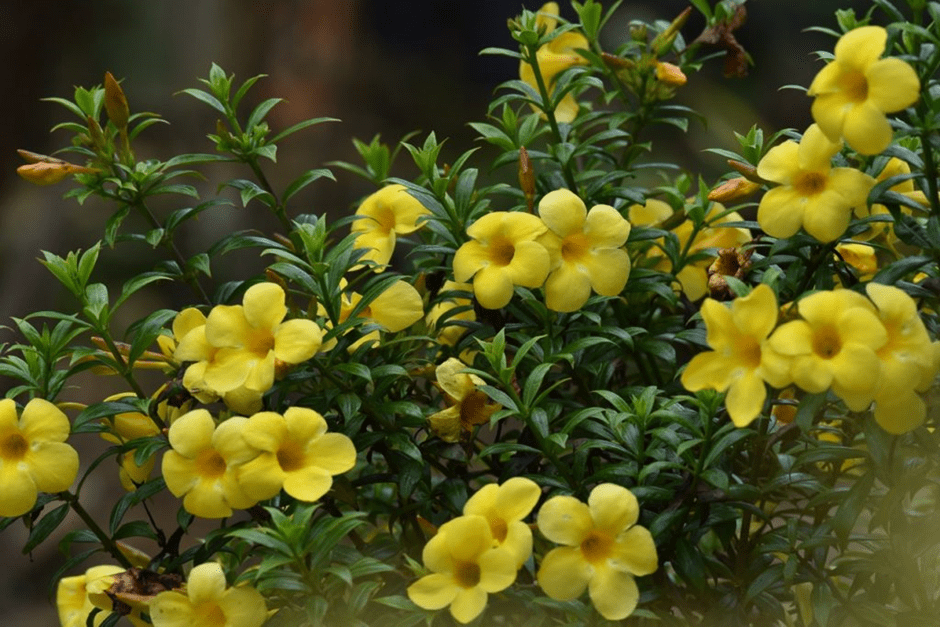
Two very special flowers, one from home, as in Sri Lanka. The flowers on the Oleander(Nerium Oleander) bush, known for its golden yellow colour and favoured by cuckoo birds who feast on its fruits. The cuckoos are known for being hesitant to build their own nests, that they resort to tipping the eggs from an unsuspecting bird’s nest to replace with their own. This very serious misdemeanour aside, the cuckoo birds are a beautiful creation spreading harmonious melodies and bringing cheer to many gardens. Scientific name of Asian Koel(Eudynamys scolopaceus), and atypically amongst the bird family, it is the female of the species that I consider the more attractive of the two, bearing distinctive speckled feathers and red eyes.
Now to the Oleander plant, feathery green leaves, slender branches and profusely covered in trumpet shaped blooms for the most part of the year. The fruit, small and circular, pale green in colour, when sliced open releases a milky sap, deemed poisonous and dangerous to humans, but the cuckoos can withstand this toxicity. Countless memories of watching a pair of cuckoo birds, from my window, contentedly perched on the Oleander (Nerium Oleander) shrub, partaking of the fruit, whilst engaged in pleasant chit chat.

The otherwise canny crow, who is the unwary victim of this elaborate con, nurtures the cuckoo chick, on occasion along with its other chicks, and only wises up when the chick has reached maturity. It is a quite a spectacle to witness a gigantic (in relation to the crow) cuckoo chick being chased around by an exasperated mum, both none the wiser as to what led to this predicament. The unwitting crow aside, the cuckoo bird and the oleander plant a perfect evolutionary fit, and ingenious in having found each other.
The cost to mummy crow in having to expend precious energy in feeding and protecting this chick from predators, only brings to my own mind, another little dilemma that troubles my slumber from time to time. Which is what is the cost of discrimination, or any form of bias. Though not always directly correlated, the cost of discrimination substantial, as deduced by some rudimentary toting up of figures in my head.
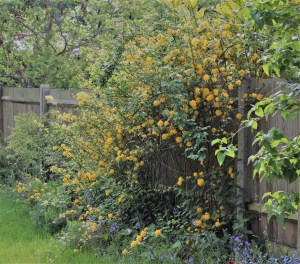
Now the kerria japonica, known for its small, profuse showers of yellow flowers coming to bloom in early spring is a fond sight in many gardens due to its hardy and resilient nature. Requiring regular pruning to keep its many suckers/offshoots from taking over the garden, it is able to withstand cold weather, a little bit of late frost, relatively low maintenance and happy to thrive in the shade in harmony with other plants.
 refreshed.blog
Leave a comment